Industry
Network Marketplace
Client
Sagetap
Year
2025
Sagetap is a B2B marketplace that changes how technology buyers discover, evaluate, and purchase software. Most software research and evaluation experiences are overwhelming. Vendors aggressively pitch while buyers defensively filter through noise. Sagetap creates something different: a space where evaluation is about partnership and learning rather than pressure and persuasion.
The platform enables technology buyers to create anonymous profiles and connect with software vendors through 1:1 Zoom sessions focused on their specific needs. Buyers maintain complete control, exploring solutions anonymously, asking questions without pressure, and only sharing their identity when they're genuinely interested. No spam, no unwanted follow-ups, buyers communicate and proceed with next steps when ready.
This model transforms the experience for both sides. Buyers research and evaluate in an environment designed for honest learning rather than defensive filtering. Vendors engage with buyers who actually want to meet, replacing cold outreach with warm conversations. By removing friction and adversarial dynamics, Sagetap enables faster decisions, better vendor relationships, and a process grounded in transparency and trust rather than pressure and persuasion.
The Problem
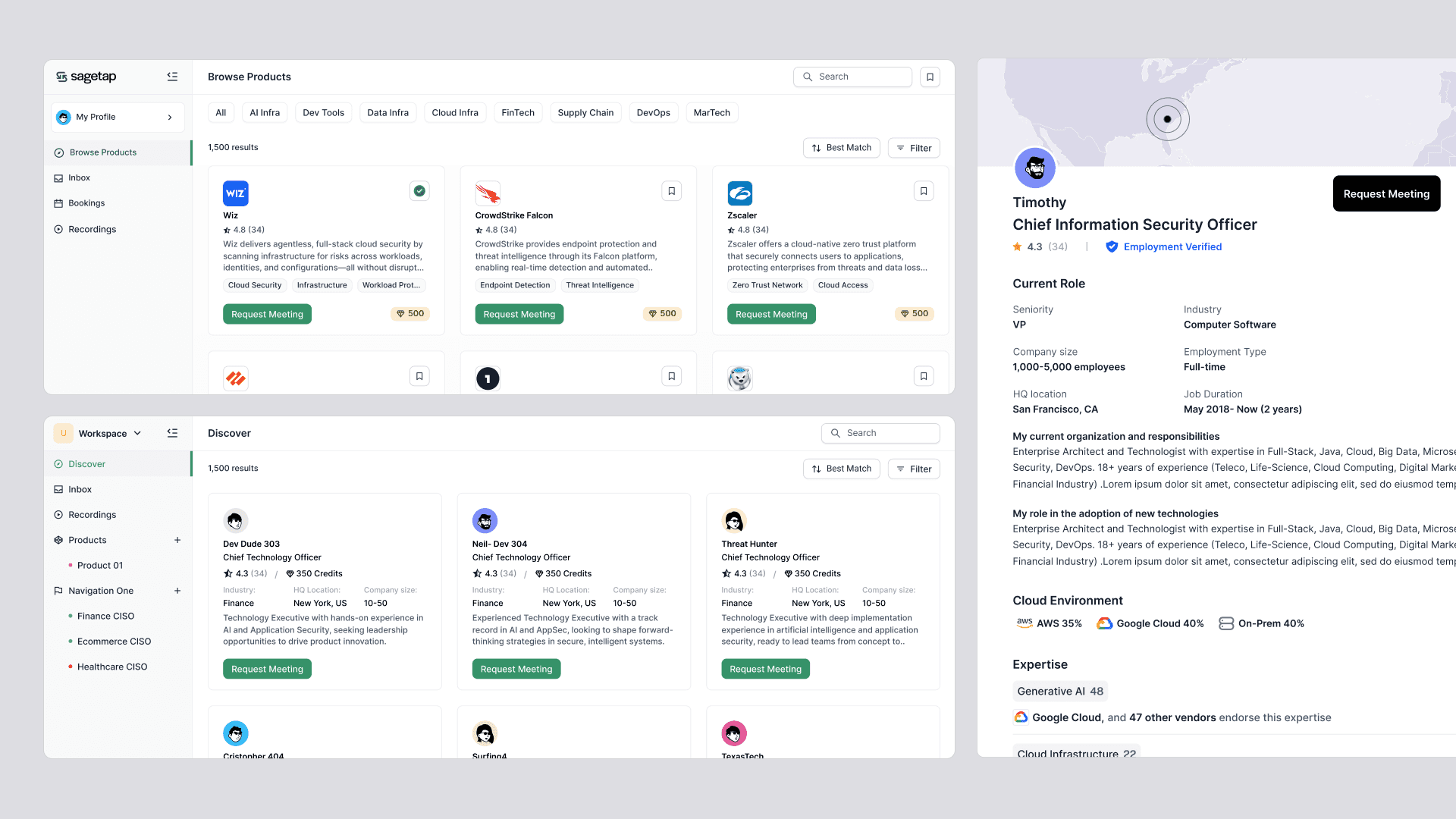
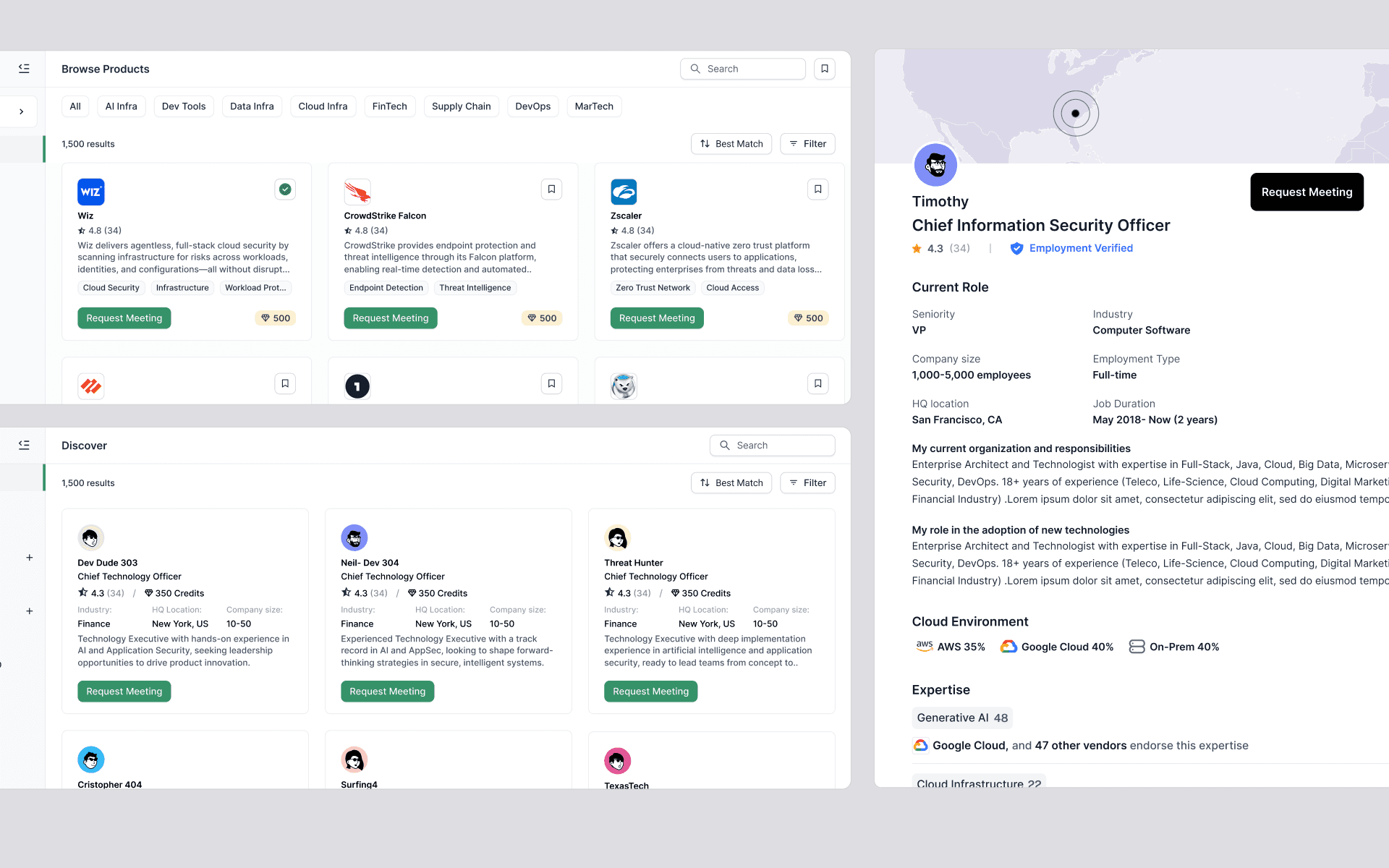
When I joined Sagetap in October 2022, the product was straightforward. Technology buyers would join, build anonymous profiles, and both sides would browse and request to meet. But this simple model created serious friction.
The core problem was misaligned expectations. Vendors connected with buyers based on organizational criteria rather than actual technology needs. Buyers could be casually exploring solutions for next year or urgently evaluating for an immediate need and vendors had no way to know the difference. Vendors expected buyers actively in the market for their solution. Buyers expected research conversations and initial learning. Neither side got what they needed, resulting in generic pitches instead of tailored conversations.The impact was severe: 40% of vendors churned within 90 days, primarily due to mistrust from exaggerated buyer intent and false interest signals.
Research
We knew we needed to change how vendors and buyers connect. Aligning them around the buyer's active organizational goals and initiatives rather than demographics. We interviewed 15 technology executives to understand how they approach software evaluation. Some key insights:
Evaluation cycles are non-linear. Buyers pause, restart, and reprioritize based on budget cycles and organizational changes.
Shortlists emerge organically. Buyers accumulate options over time through conversations and peer recommendations, not formal comparison matrices.
Internal solutions come first. Executives prioritize build-over-buy, attempting to solve problems independently before considering vendors.
POCs are non-negotiable. Proof of concepts are essential—it's nearly impossible to understand integration outcomes without hands-on testing.
Conversations over proposals. Buyers prefer collaborative learning calls, not polished RFPs as first contact.
Peer insights trump marketing. Decision rationale from other executives is far more trustworthy than vendor materials.
These insights pointed to a clear opportunity: if we could help buyers document and share their initiatives, buyers would get peer learning, vendors would get context for better meetings, and the platform would facilitate more meaningful connections.
Design Definition
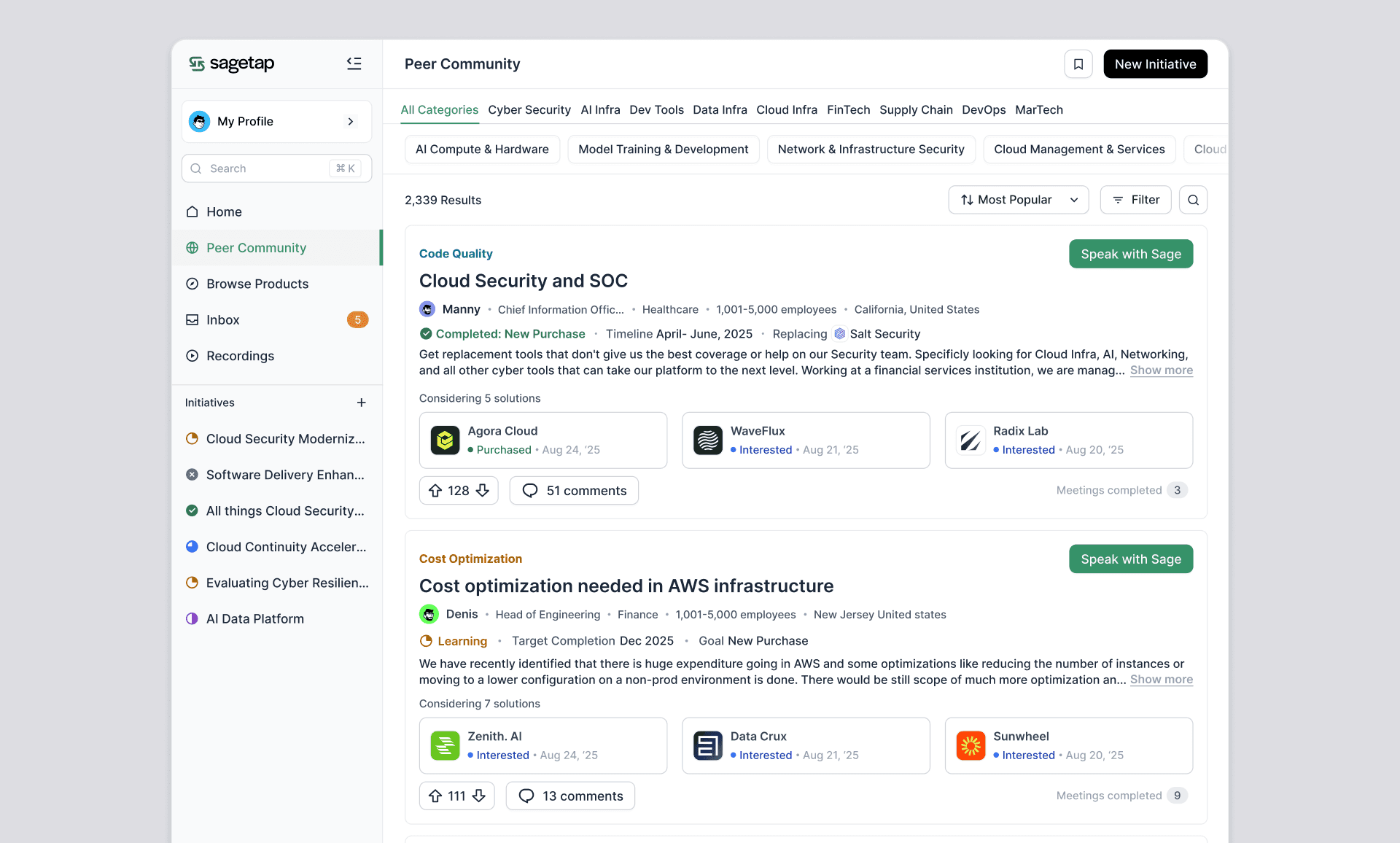
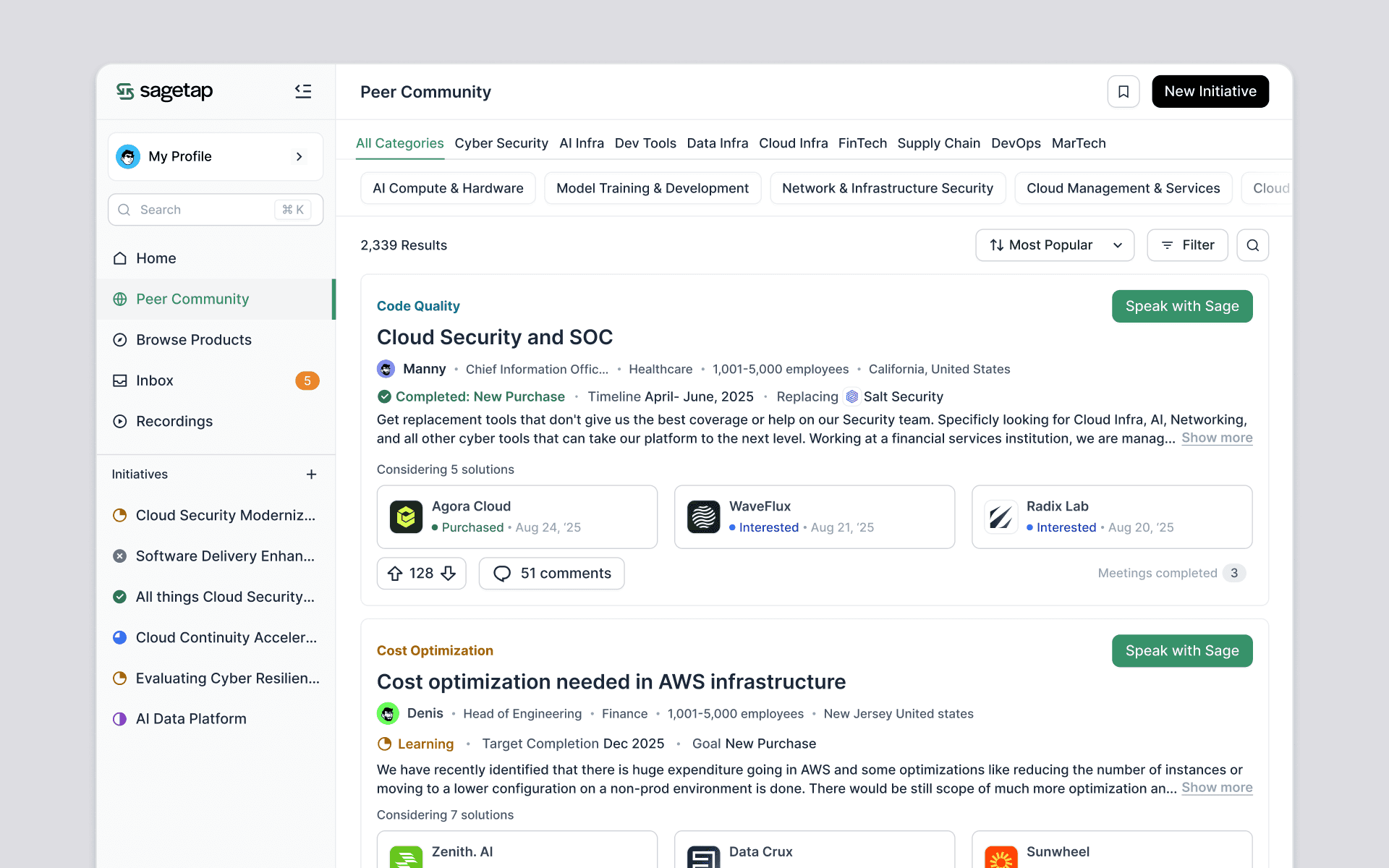
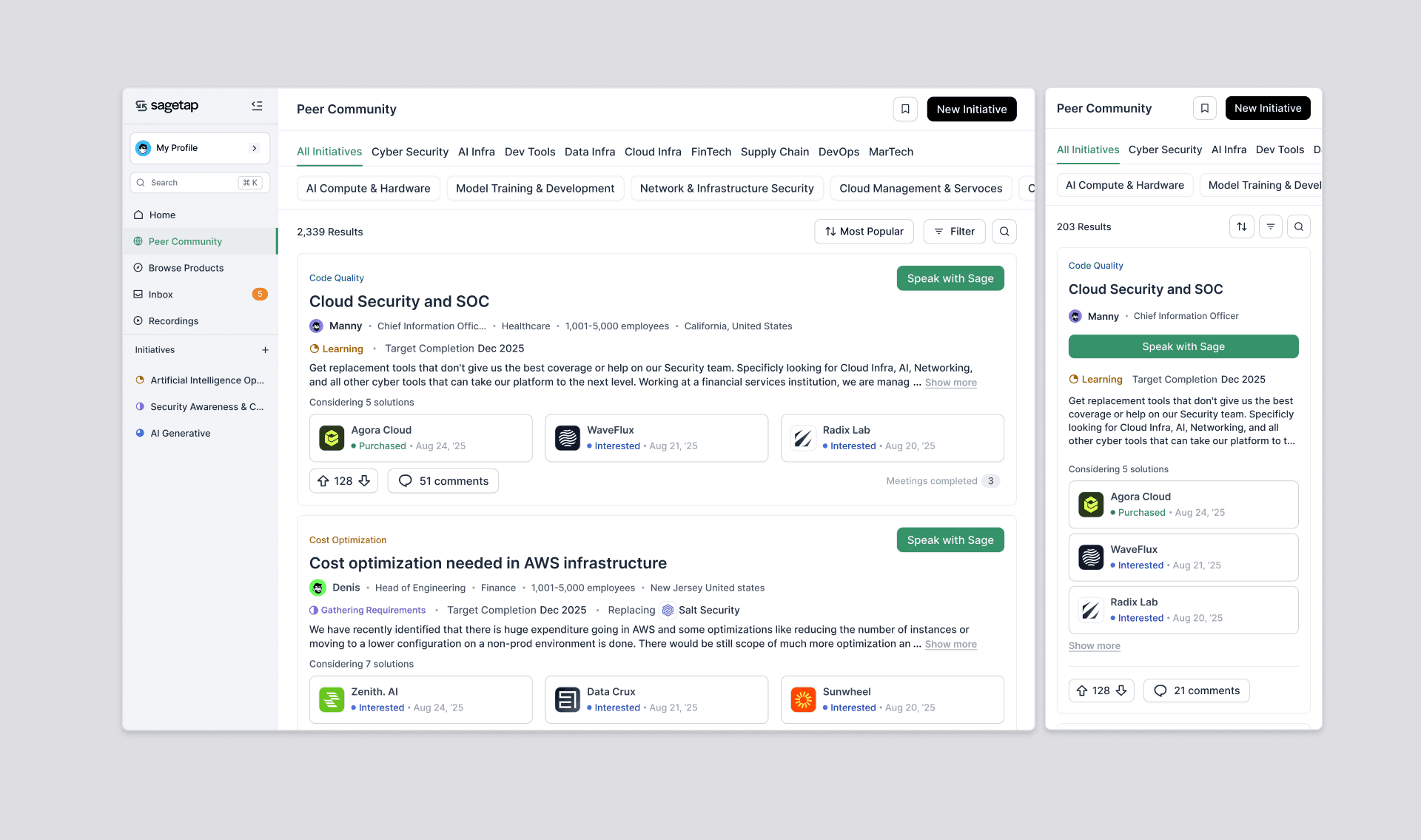
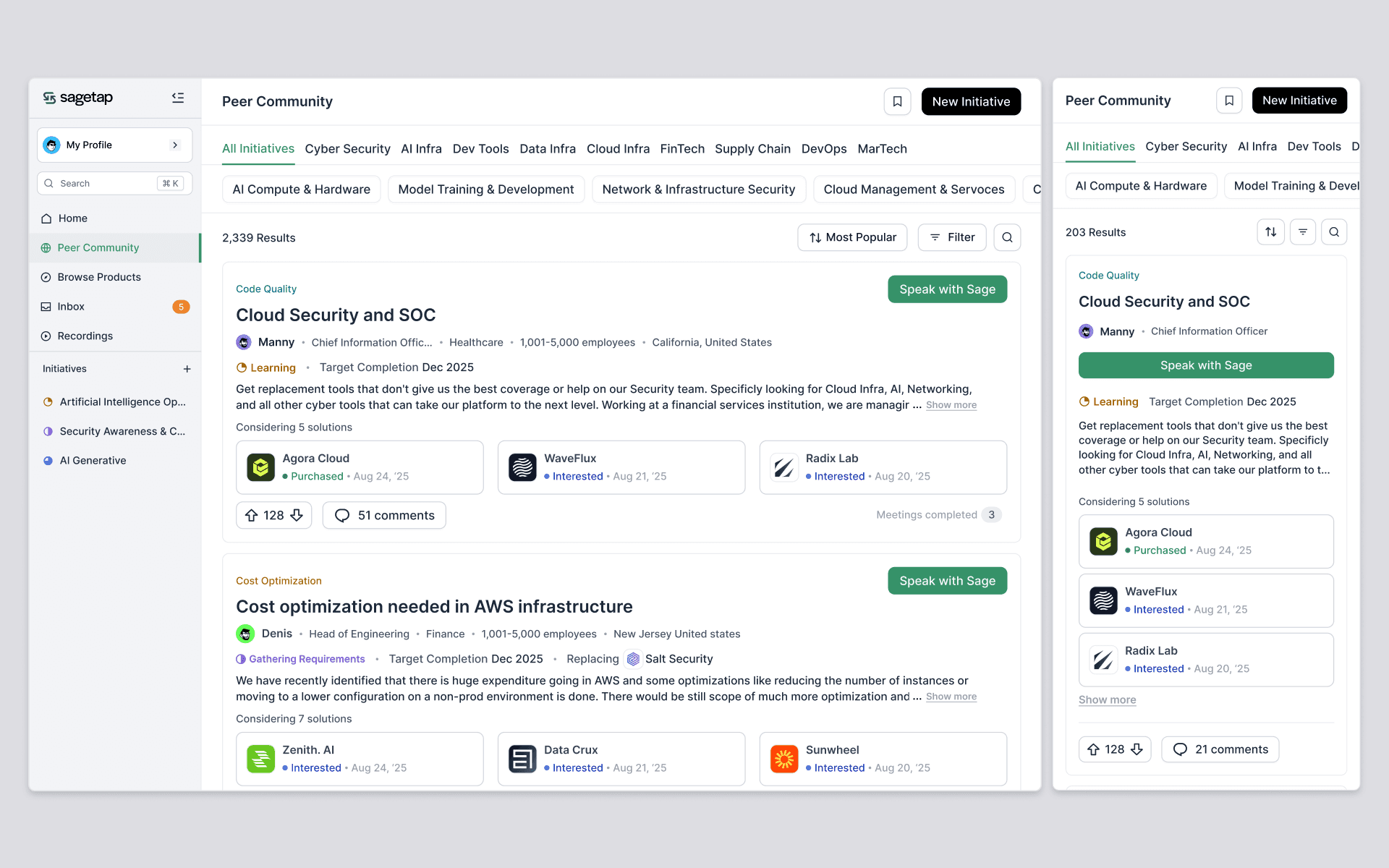
We set out to transform Sagetap from a transactional meeting platform into a collaborative evaluation ecosystem where buyers document technology initiatives, track evaluations, and share progress with vendors and peers. The core innovation was enabling peer-to-peer learning. Buyers could browse active or completed initiatives to see what solutions others considered, what they chose, and why, while vendors gained the context needed to deliver relevant, personalized outreach.
We explored options for showcasing project requirements and evaluation tracking, testing questions like: How much information should be required upfront? What would peers want to interact with?
Some key insights emerged.
Progressive sharing with minimal upfront requirements. Buyers shouldn't fill out lengthy forms to create an initiative. They start with basics and add detail as their thinking evolves.
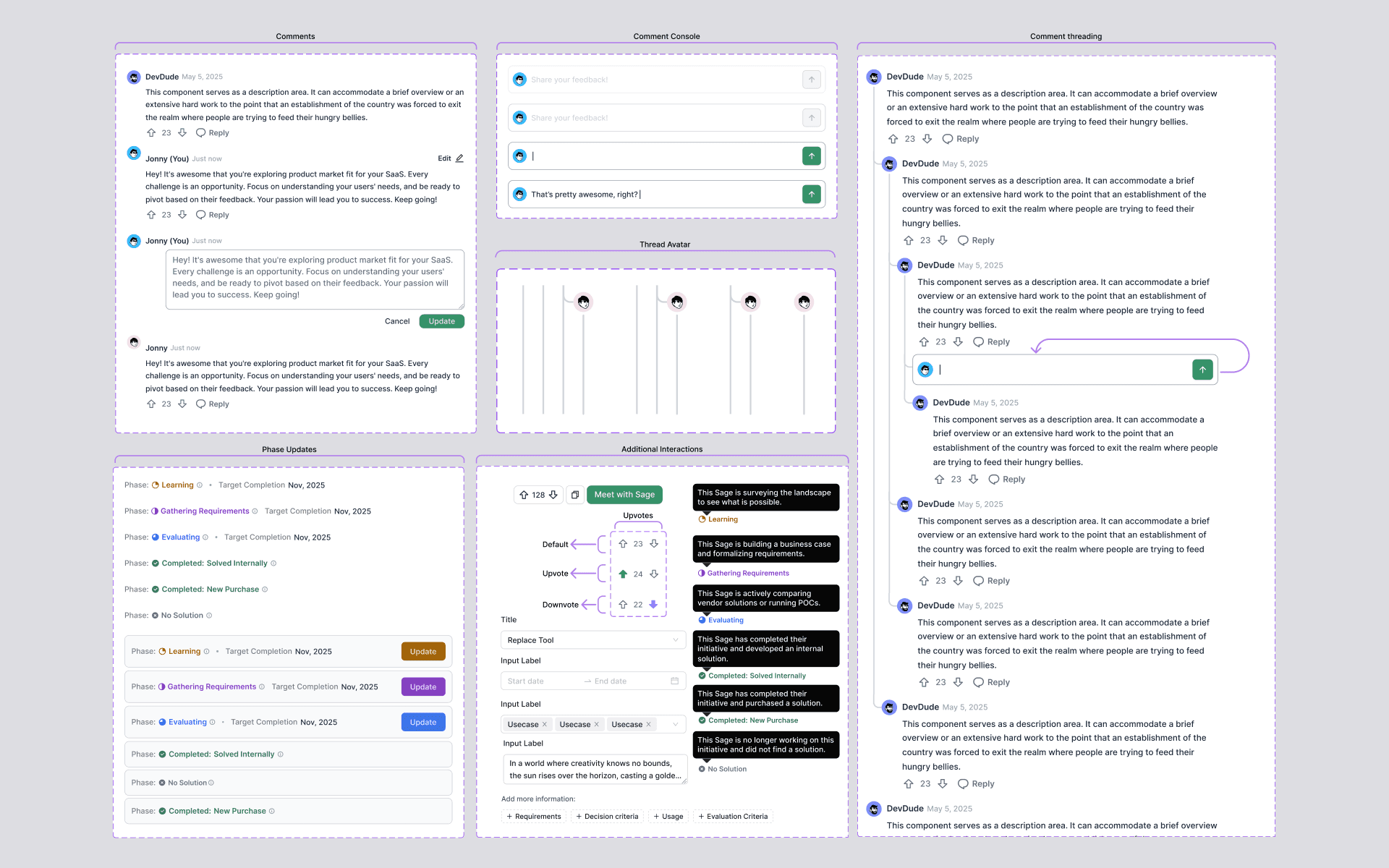
Forum-like collaboration. Buyers wanted to develop partnerships through peer commenting, suggestions, and feedback that aligned with how they actually engage.
Clear phase and status indicators. We needed visibility into evaluation stage. Has the initiative received organizational buy-in or is it just an idea? Workflows to update, pause, or mark initiatives complete became valuable learning artifacts.
Document external activity. Sagetap is one point in their evaluation process. Buyers might be meeting with vendors elsewhere, so we let them share who else they're considering.
Qualitative insights over rankings. Everything is unique with no one-size-fits-all solution. Buyers want to read about challenges faced and how they were addressed, not competitive rankings. Initiatives are about solving problems, not just buying software.
Final Solution
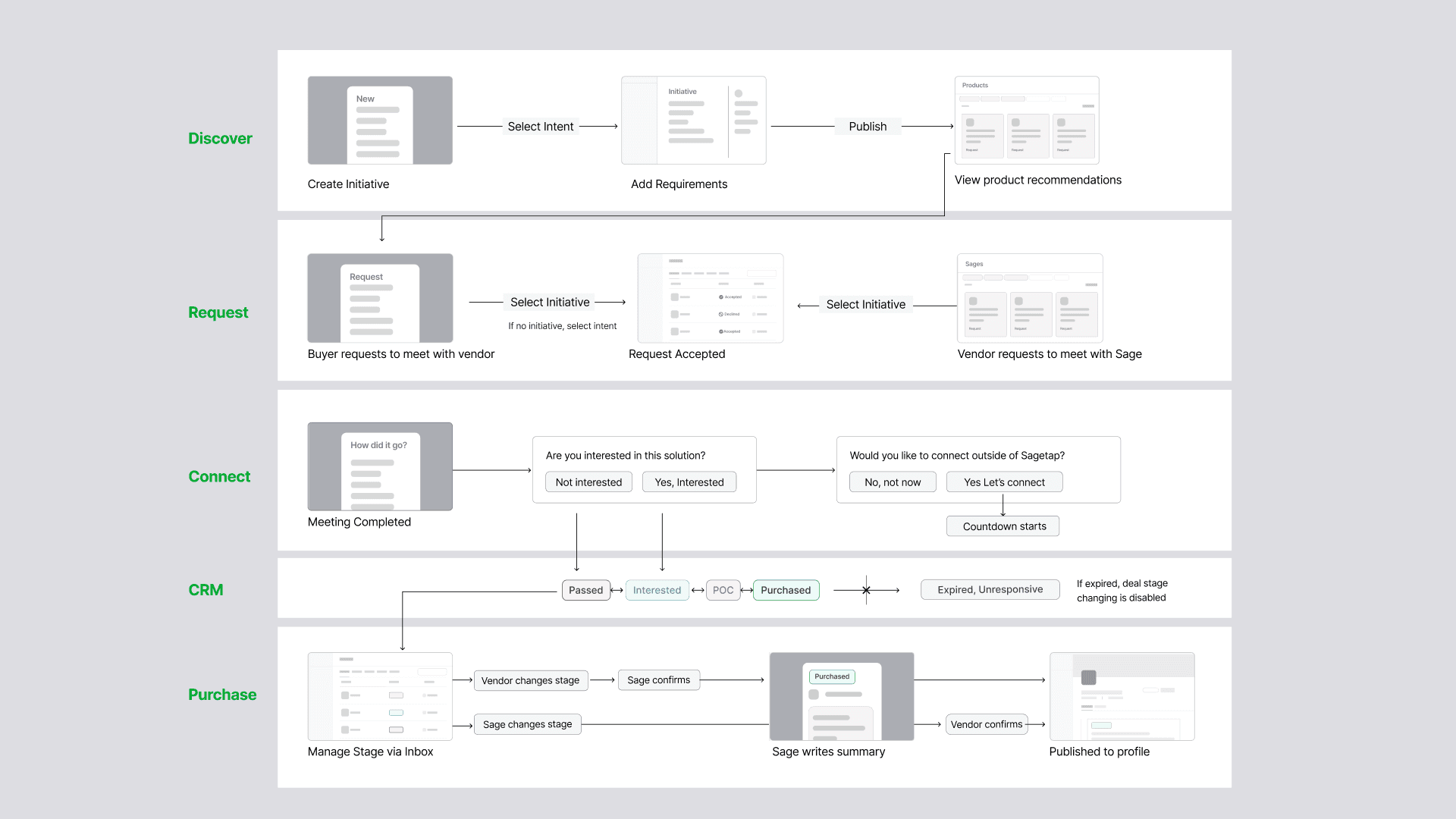
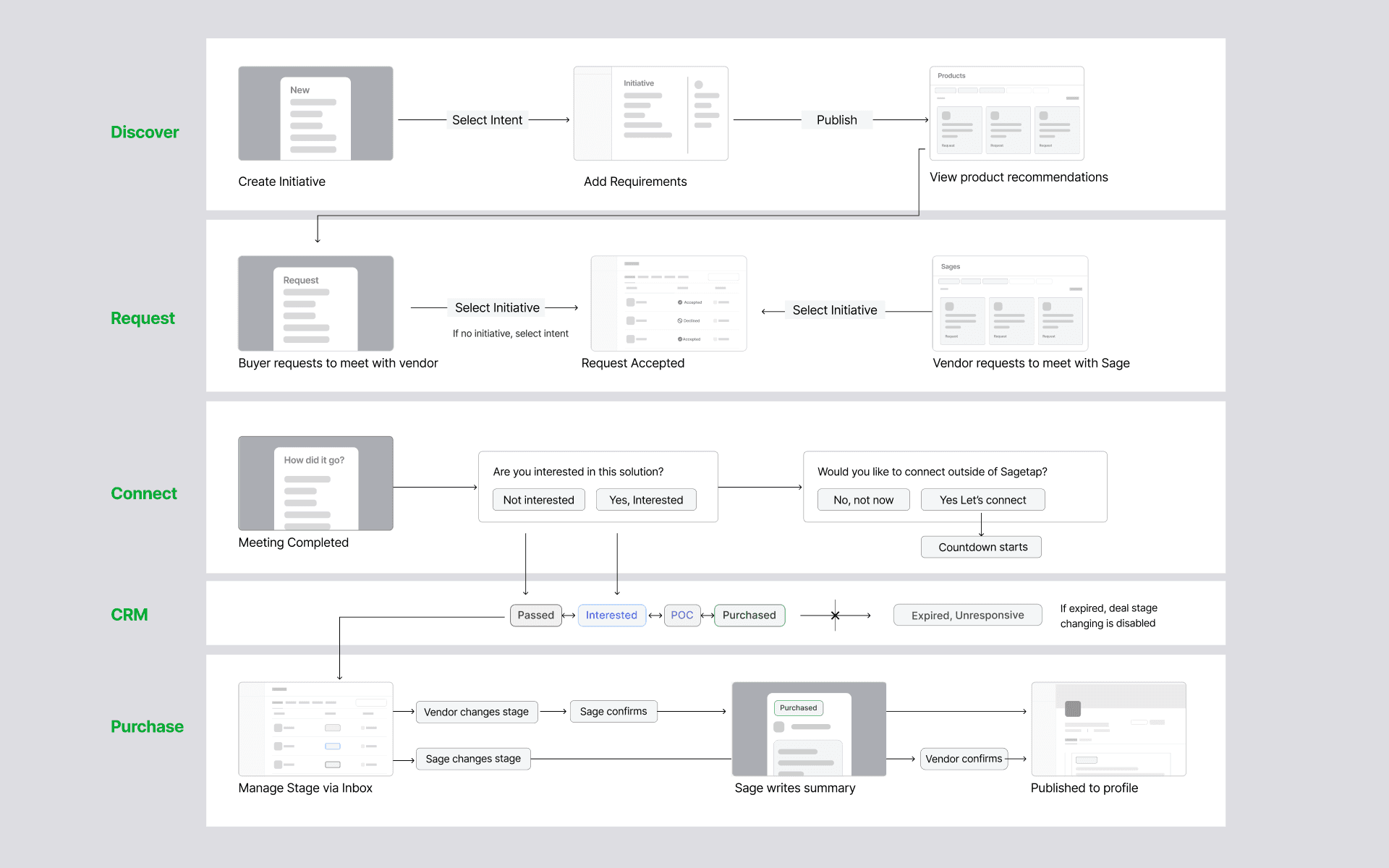
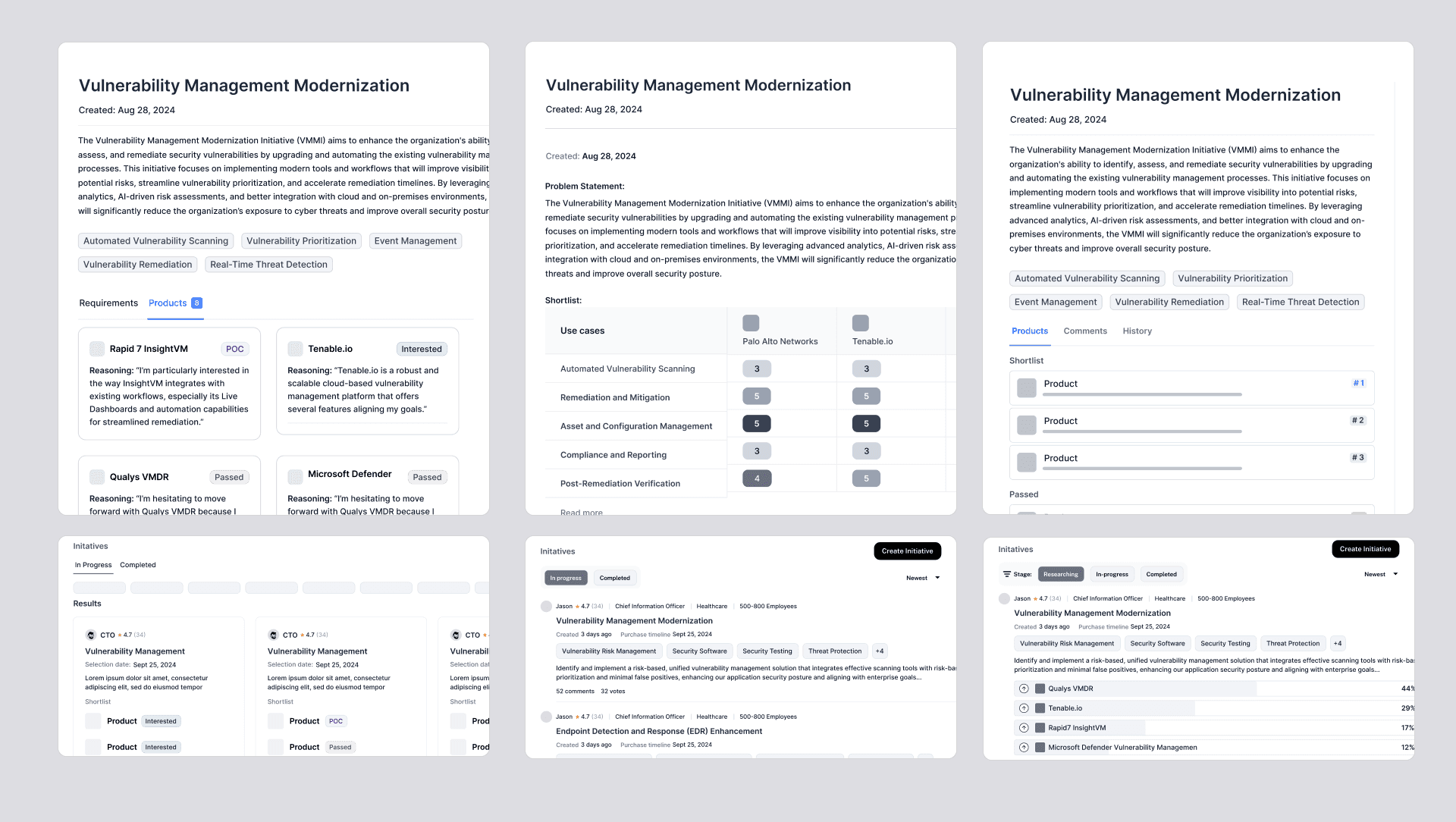
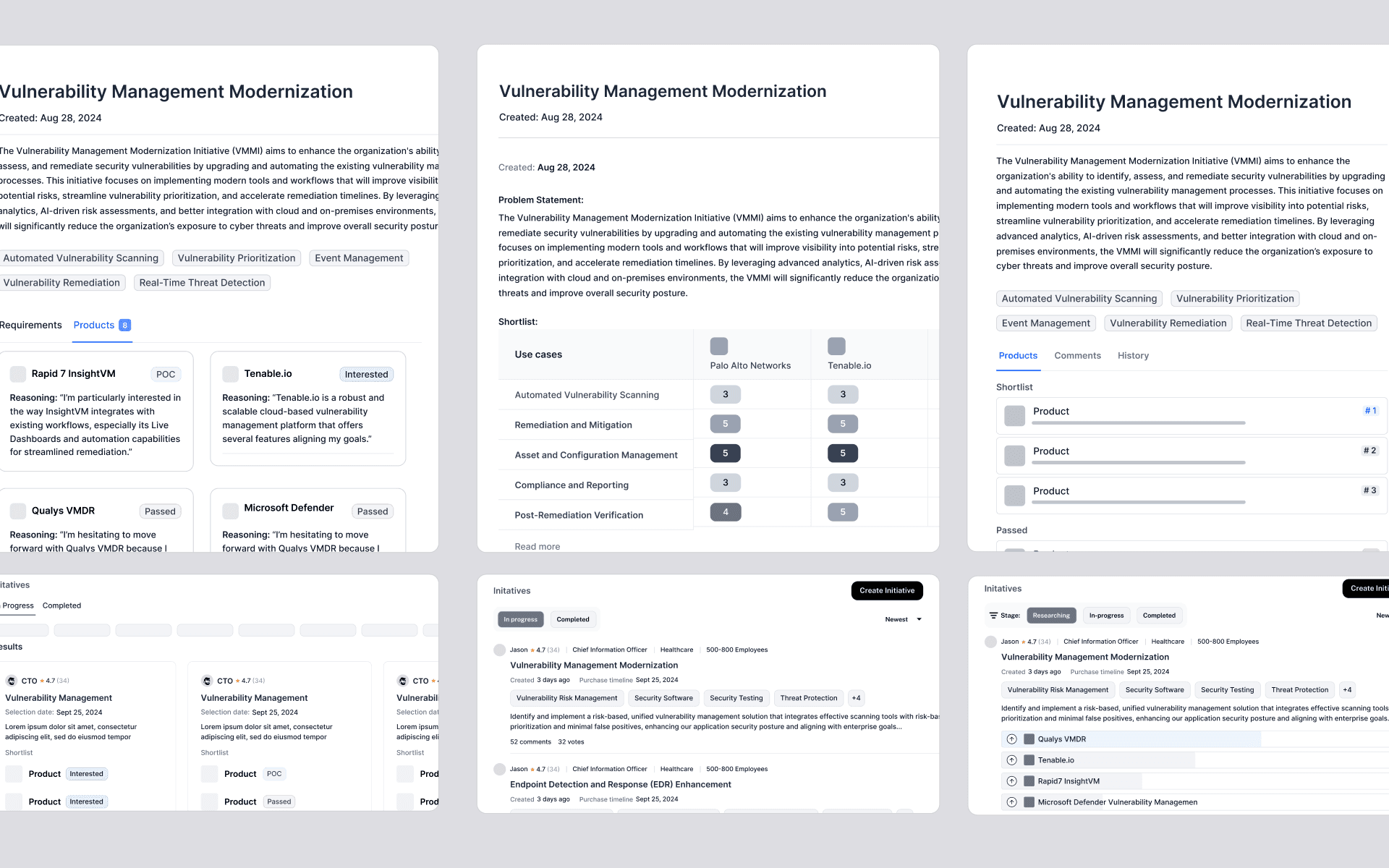
Our solution transformed Sagetap from a transactional meeting platform into a collaborative evaluation ecosystem where buyers document technology initiatives, track evaluations, and share progress with vendors and peers. Buyers could track solutions throughout their evaluation, updating interest levels and providing retrospectives that gave vendors competitive context while creating learning artifacts for the community.
Our goal was to build an experience that elevates decision-making by surfacing points of progress and technical investigation. We wanted initiatives to feel alive, clearly showing states of updates through deal changes and phase adjustments. An initiative serves as a way for buyers to proactively share their requirements with vendors and gain feedback from peers.
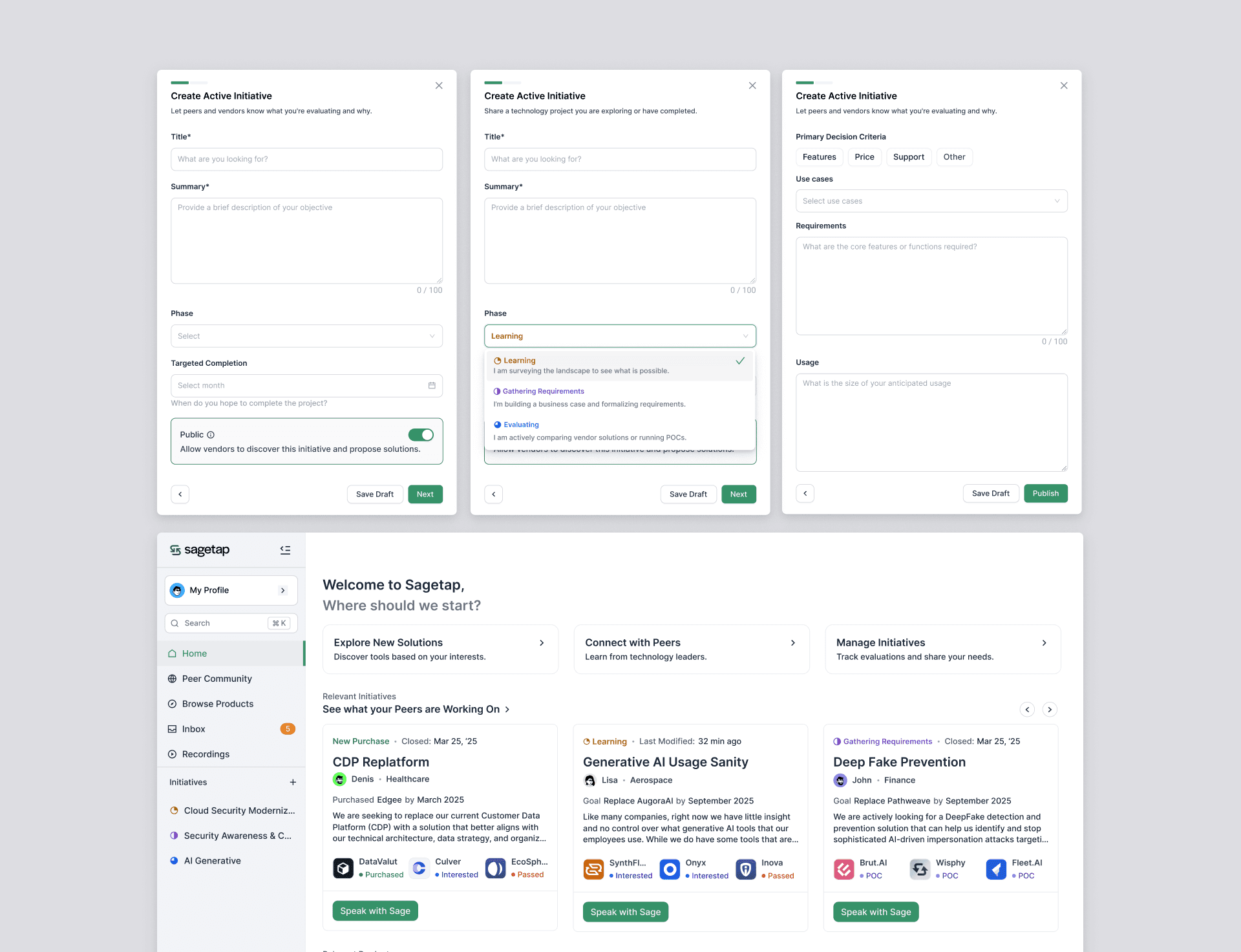
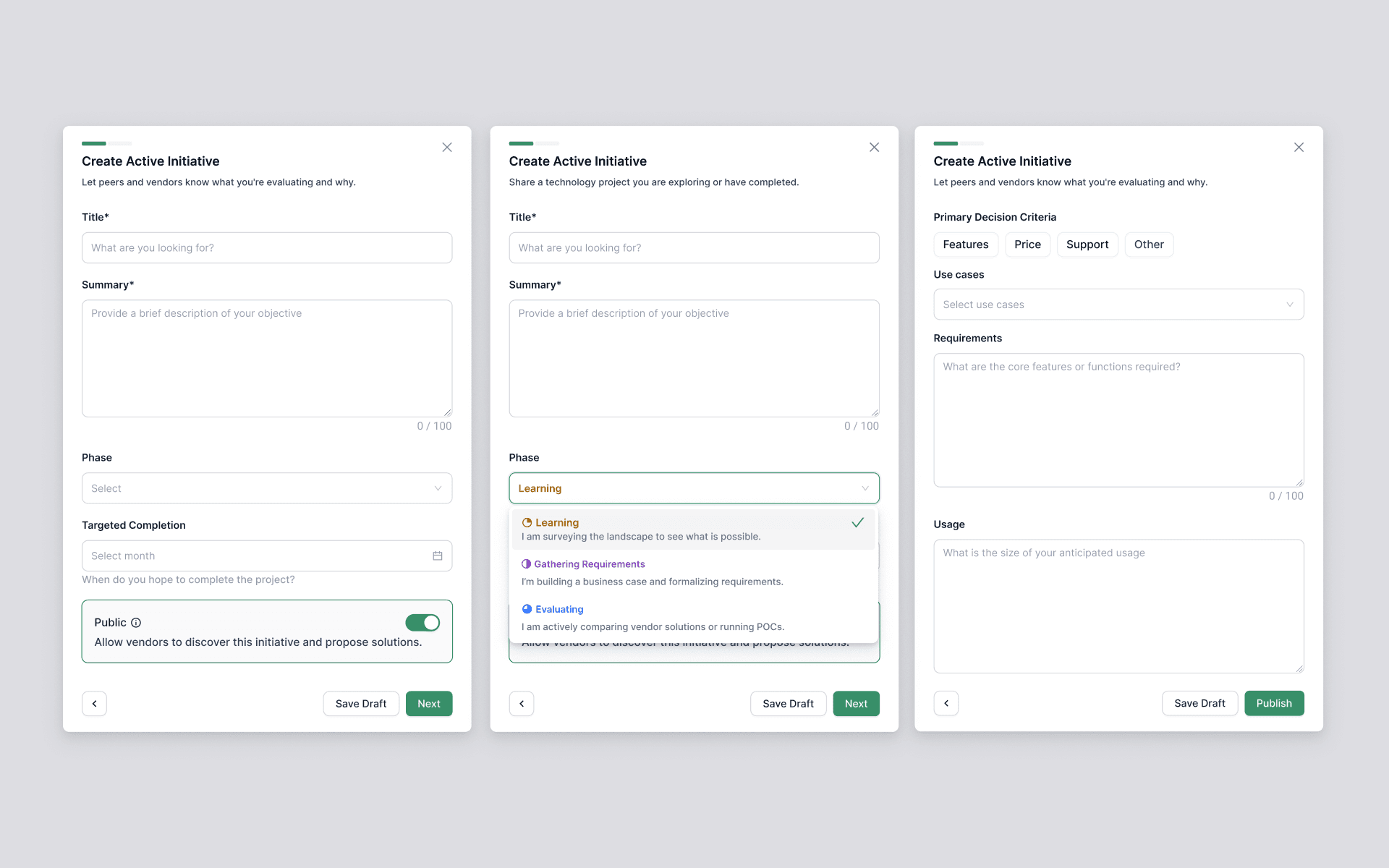
The creation process prioritized ease over completeness. Buyers provide basic information upfront and deeper editing comes later to promote progressive documentation. We made it easy to update the phase and built in expiration reminders tied to the target completion month. When applying to meet with a vendor, if the target completion date has passed, buyers receive a modal reminder to update before proceeding.
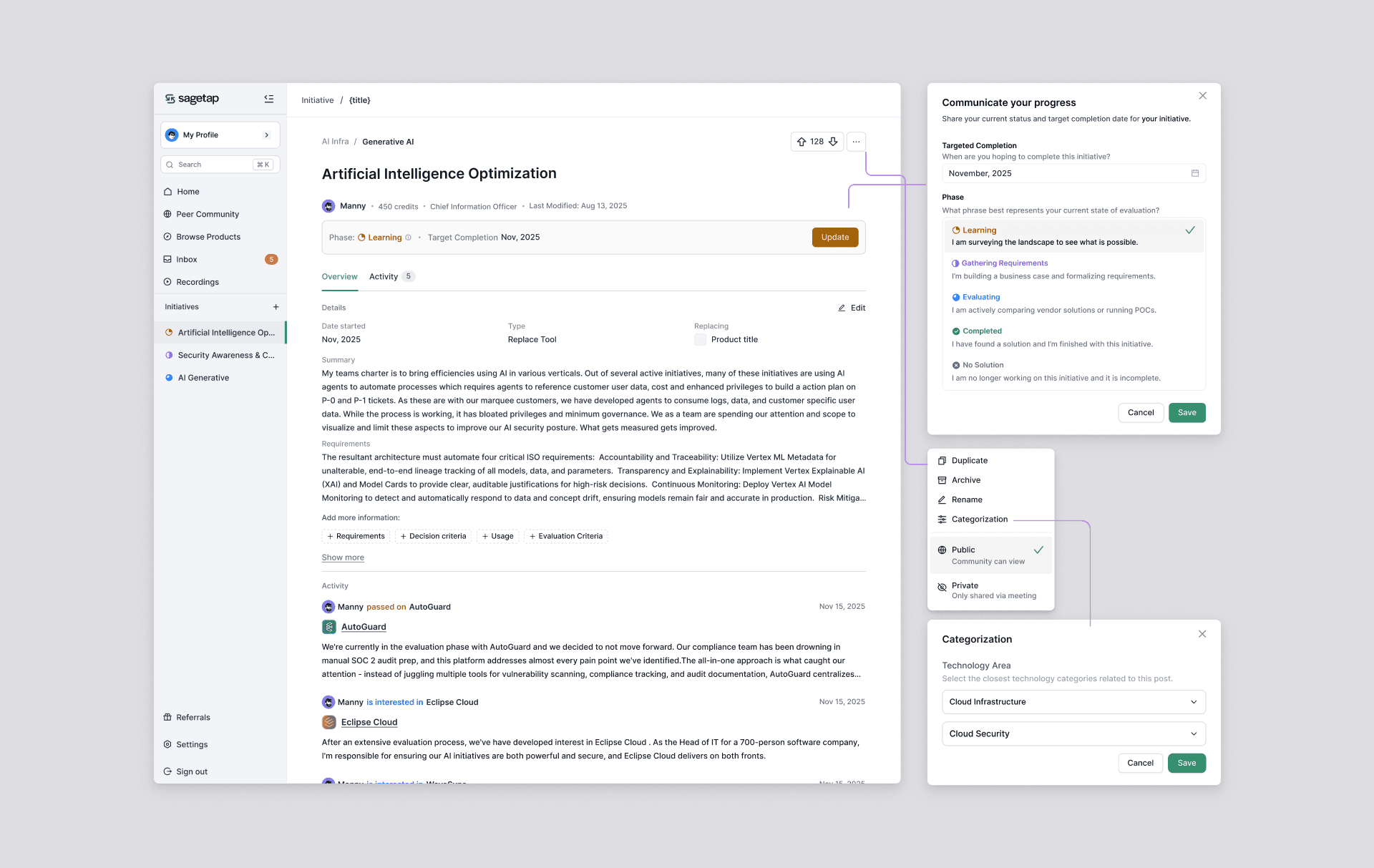
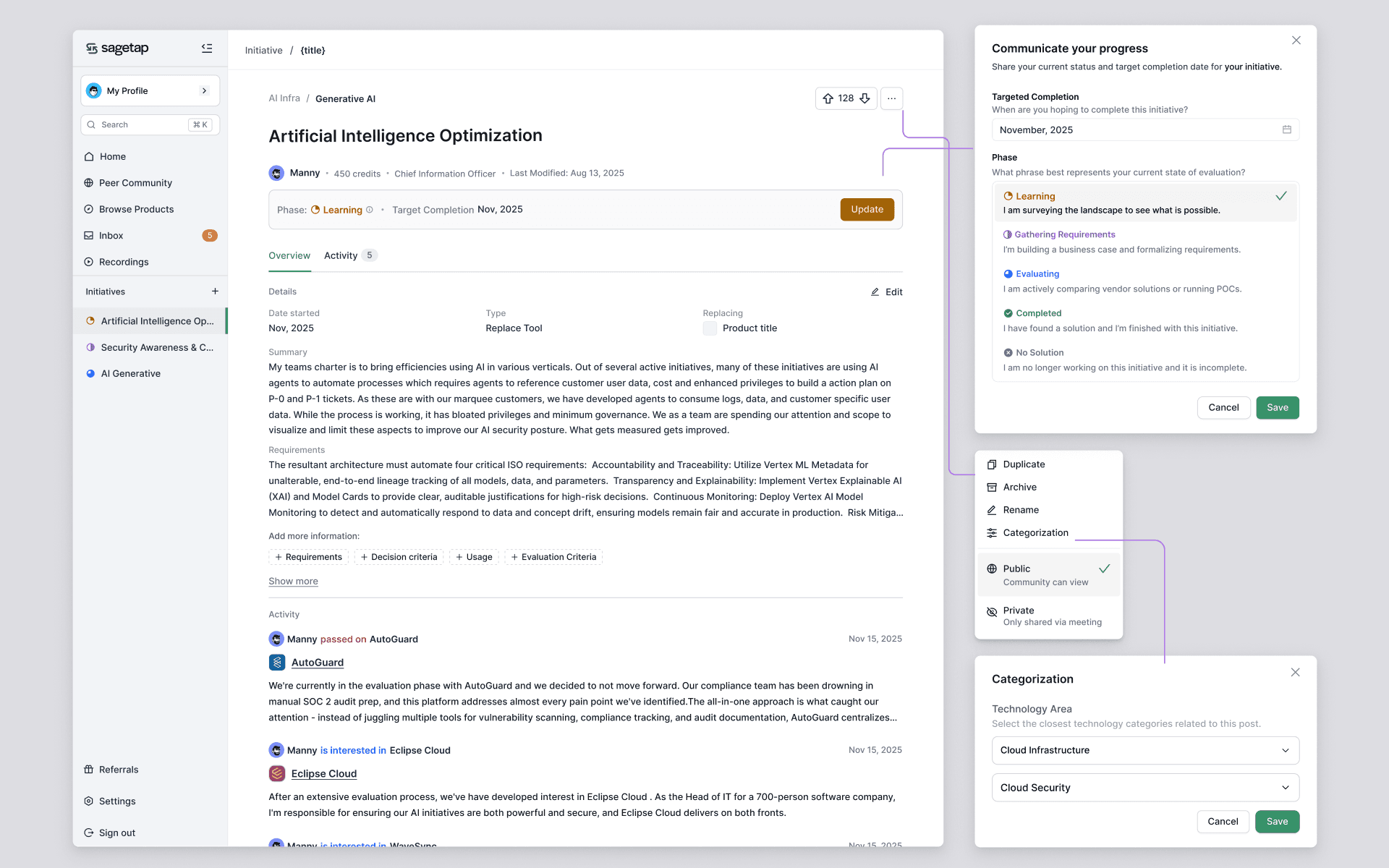
When buyers finish or pause their initiative, they add outcome information for community learning, what they chose, why, and what they learned. This serves as a historical artifact for peer learning and signals to vendors that the evaluation has concluded
Buyers track solutions throughout their evaluation, updating interest levels and providing retrospectives on why they decided to proceed or pass. The system serves as a centralized record where buyers document external evaluations alongside automated updates from vendor meetings in Sagetap. This gives all vendors context about where they sit relative to competitors and creates valuable learning artifacts for the community.
Deal activity surfaces both on the buyer's anonymous profile and on the associated product page. The summary of the deal stage serves as a retrospective showing why a buyer decided to proceed or what the outcome of a POC was. When other buyers research the solution, they can view hands-on reviews of their trial or purchase experience.
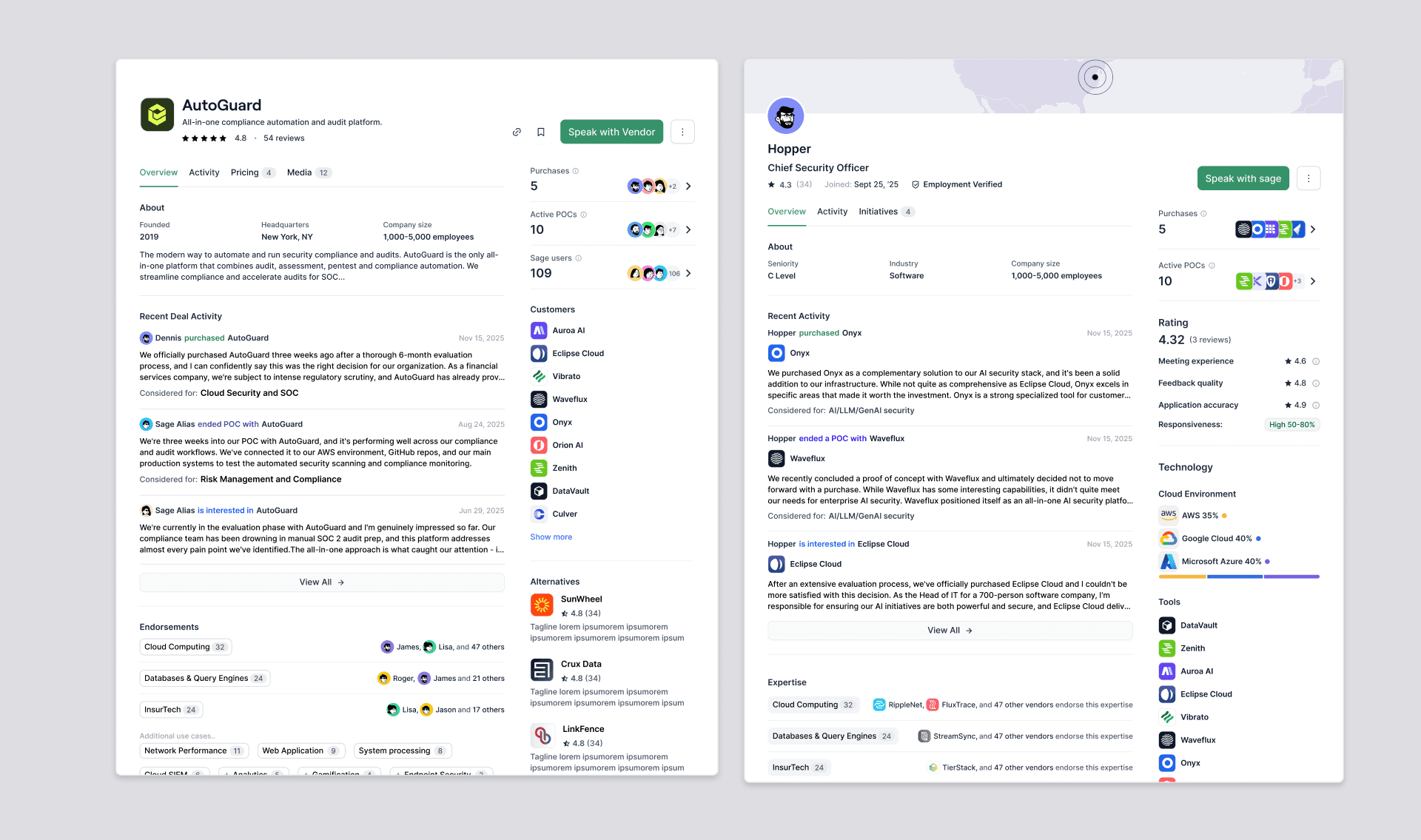
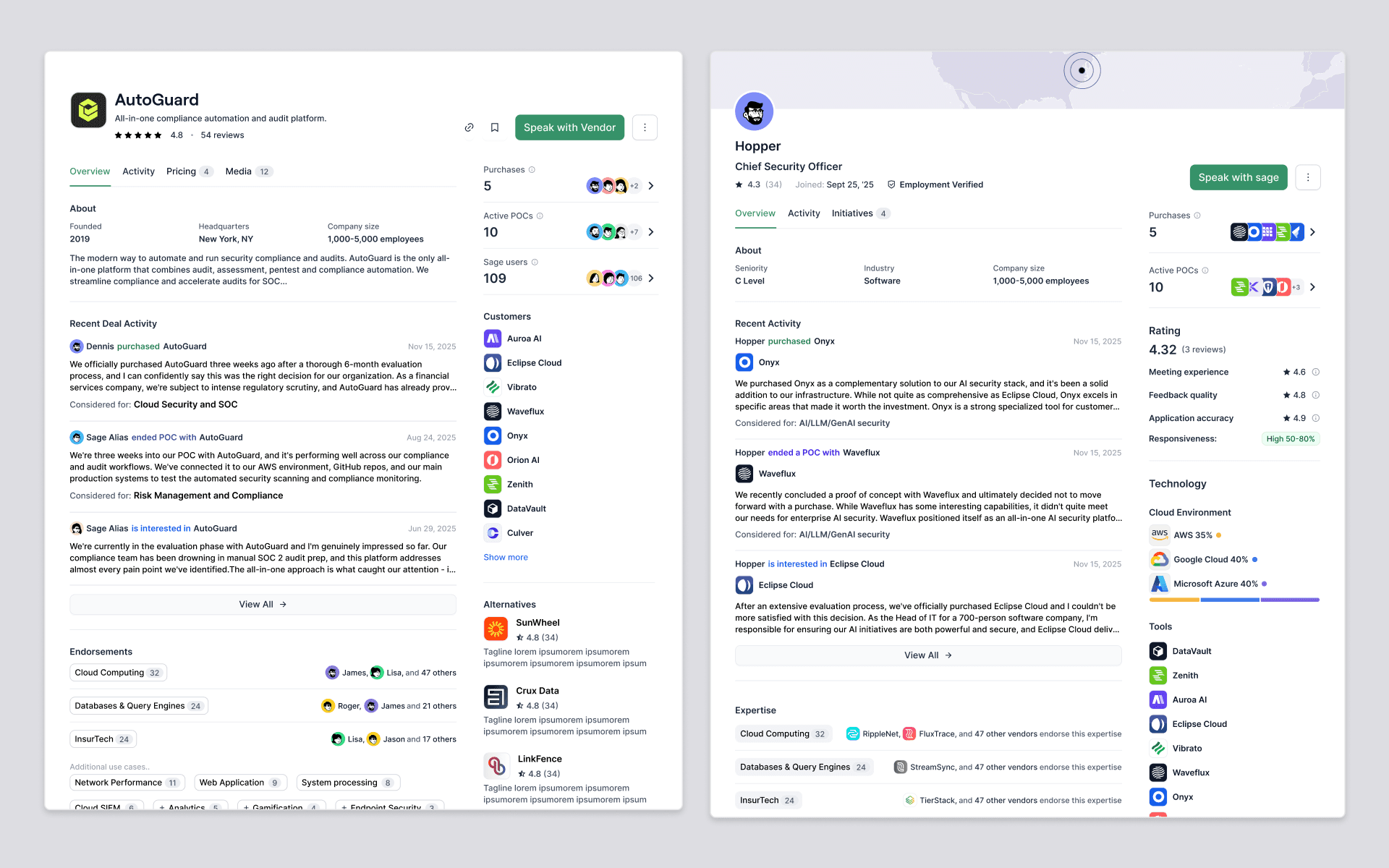
We embraced forum-type experience with commenting and upvoting per category. The home page surfaces initiatives most relevant to each user based on their technology focus and role. Buyers can request meetings with vendors for their specific initiative, explaining why they think there's a fit. Vendors can send personalized meeting requests based on buyer goals, using the initiative as an agenda for demos or pitches tailored to the specific need.
Results and Learnings
Within the first 30 days of launch, over 900 initiatives were created and buyer activation increased by 30%. This project fundamentally shifted Sagetap from a meeting facilitation platform to a collaborative evaluation ecosystem. We moved from transactional, one-time meetings to ongoing evaluation workflows. Community-driven growth accelerated, and we used initiatives as a means of surfacing insights and trends that fueled discovery.
There was strong initial learning based on some lacking areas of success which guided deeper solutions around the experience
Limited Commenting : We assumed initiatives would be a space for discussion and feedback, but users found it challenging to understand what to write. There was initial limited engagement with commenting. We later implemented private messaging between users which had higher adoption
Additional education: Despite major adoption success, there additional effort needed to educate users on how initiatives worked. We implemented stronger onboarding guidance and extended the experience to our website so buyers were properly set up to understand the value from the start.
Vendors had hesitation for early-stage initiatives: Vendors had hesitation in meeting for initiatives in early exploratory phases, wanting to focus on conversion rather than learning. We addressed this by applying a 20% discount to early-phase meetings when buyers were still gathering requirements and learning.
By focusing on buyer needs and peer-to-peer value creation, we built a foundation for sustainable growth that extends far beyond transactional relationships. The initiative-led approach proved that transparency and structured workflows could solve marketplace friction while creating new opportunities for community engagement and business model innovation.